How to climb
Kilimanjaro
Book a licensed operator, choose an itinerary with time to acclimatise, and prepare for consecutive days of walking. The usual trekking routes are walks, not technical rock climbs — but altitude makes this a serious undertaking.
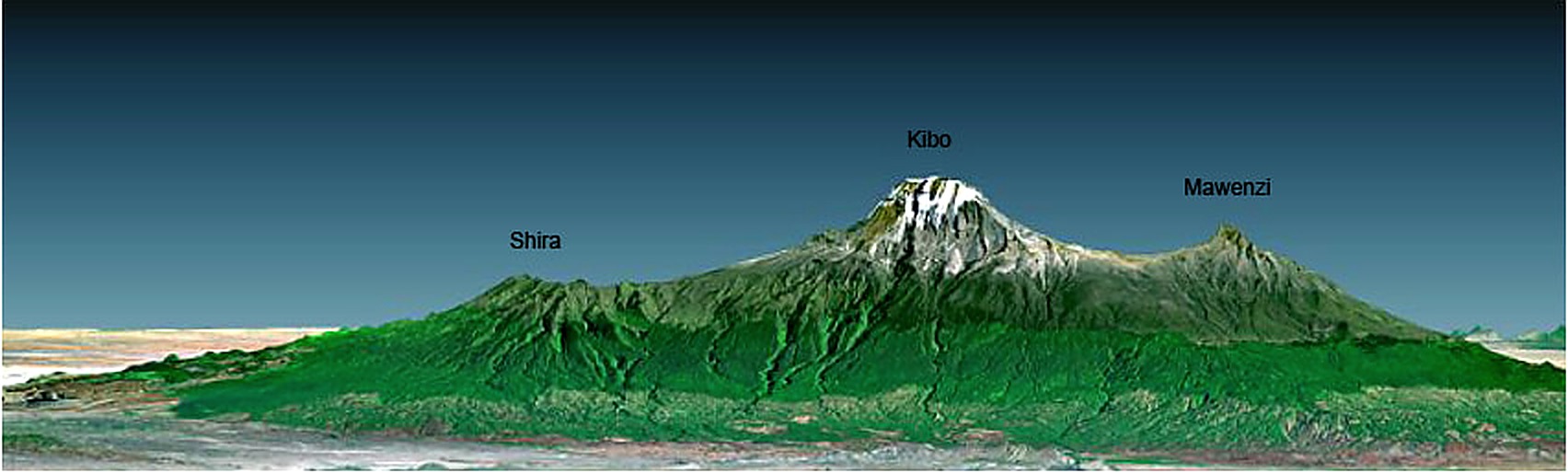
Kilimanjaro from the south · NASA
Start with the itinerary, not the summit photo
Tanzania National Parks requires guided climbs with a licensed operator; solo trekking is not permitted. Ask who will guide you, how the crew is supported, how health is monitored and what happens if you need to descend.
Compare the longer versions of each route rather than picking the shortest package. More time gives your body a better opportunity to acclimatise, but no itinerary guarantees a summit. Fitness does not protect you from altitude illness.
Weather, cold and crowds all change through the year. Compare the twelve months before fixing your dates, then ask the operator how weather can affect the route and daily schedule.
Compare the monthsCompare what you are actually buying
Marangu uses mountain huts; the other usual routes use tented camps. Compare walking days, sleeping altitudes, acclimatisation days and descent arrangements — not just the route name.
There is no single honest price for every climb. Request an itemised quote covering park fees, guides and porters, food, accommodation, transfers and equipment. Check what is excluded: tips, flights, insurance, visa, hotel nights and rental kit can change the total.
Confirm current entry requirements and arrange insurance that explicitly covers your planned trekking altitude, evacuation and medical care. Give yourself arrival time before the trek and recovery time afterwards.
See your camps and summit dateTrain for the week, not one big day
Build up regular walking, hills and longer hikes. Practise on consecutive days in the boots and daypack you will use. A steady, comfortable pace matters more than speed.
Get a route-specific kit list from your operator and check rental availability before travelling. Speak to a travel clinician about your health, altitude medication and travel vaccinations; do not self-prescribe.
- Feet: broken-in boots, suitable socks and blister supplies.
- Clothing: base layers, warm mid-layers, insulated jacket, waterproof jacket and trousers, gloves and warm headwear.
- Daypack: water, snacks, sun protection, personal medicines and spare layers.
- Night: headtorch with spare batteries and a sleeping system suitable for your operator’s expected temperatures.
The summit is optional. Getting down is not.
Walk slowly, follow your guide’s schedule and report symptoms early. Headache, nausea, dizziness or unusual fatigue at altitude deserve attention; do not keep ascending with altitude symptoms.
Confusion, trouble walking or breathlessness at rest are urgent warning signs. Tell your guide immediately: descent and medical help take priority over the summit. This guide is not a substitute for medical advice.
Summit night usually begins around midnight, followed by hours of slow uphill walking and a long descent. Timing varies with the route, weather and your pace. Do not treat the crater rim as the end of the day.
Summit night, hour by hourBefore you commit
Can a beginner climb Kilimanjaro?
A first-time high-altitude trekker can consider it with appropriate preparation, a suitable itinerary and a qualified guide. Beginner-friendly does not mean low-risk; ask a clinician whether it is appropriate for your health.
Can I climb without a guide?
No. Tanzania National Parks requires a licensed operator and guided climbing; solo trekking is not permitted.
How many days should I allow?
Our planner includes itineraries from five to nine mountain days. Compare longer options for acclimatisation and add time for arrival, preparation and recovery; a short itinerary is not an equivalent experience.
Do I need ropes or climbing experience?
The usual trekking routes do not require technical climbing skills. Uneven ground, sustained walking, cold and high altitude still require preparation. Specialist climbing routes are a different undertaking.
How do I choose a trustworthy operator?
Ask for clear itinerary and cost inclusions, guide qualifications, altitude monitoring and emergency procedures. An advertised success rate is not a substitute for understanding how they look after you.
Turn the plan into your dates
Choose a route and start date to see your camps, summit-night moon and seasonal conditions. Your personal climb details stay in the link, not on a server.
Build my climb planSomething to mark it
We make Kilimanjaro stickers and prints, including the Uhuru Peak signboard. It is the only thing we sell, and it is why the climbing tools do not ask for an email address or an account.